Making restaurant-quality Japanese Katsu Bowls at home is surprisingly simple and deeply rewarding. There is nothing quite like the sensory experience of biting into a highly textured, deeply golden-brown crispy panko breadcrumb crust. This recipe transforms humble ingredients into a spectacular meal that satisfies every savory craving.
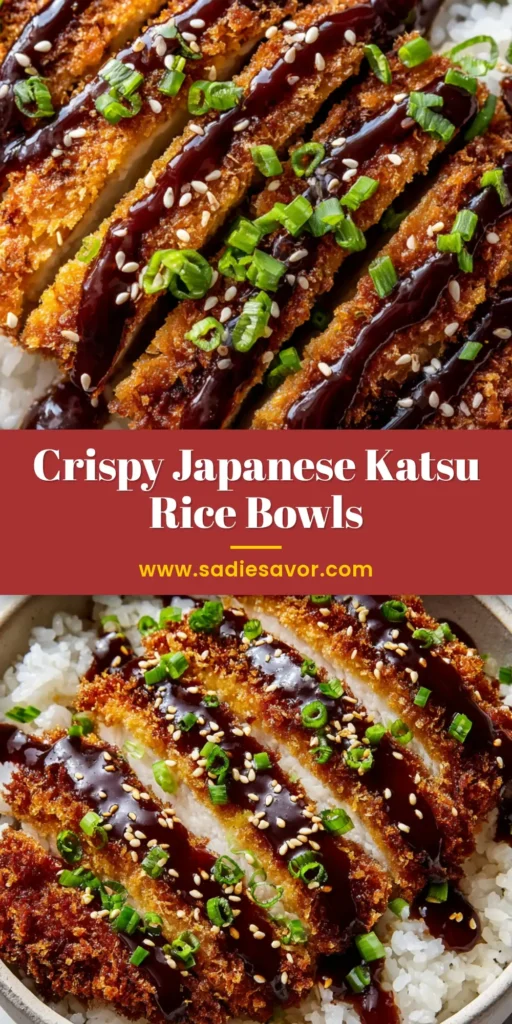
A base foundation of steaming, fluffy white rice sits inside a minimalist ceramic bowl, ready to soak up all the delicious flavors. Resting directly on the rice is a thick, perfectly cooked meat cutlet, sliced horizontally into even strips for the ultimate bite. Whether you are cooking for a date night or treating yourself to an elevated weeknight dinner, these Japanese Katsu Bowls will quickly become a household favorite.

Why You Will Obsess Over These Japanese Katsu Bowls
- Unmatched Texture Contrast: The crunch of the golden-brown panko breading pairs flawlessly with the soft, steaming white rice underneath.
- Visual Perfection: Finished with a thick, glossy, dark brown tonkatsu sauce drizzled in a picturesque zig-zag pattern, this dish looks like it belongs in a culinary magazine.
- Balanced Flavor Profile: The savory, juicy meat is complemented by the sweet and tangy tonkatsu sauce, while vibrant fresh green onions add a bright, peppery finish.
- Highly Customizable: While traditional tonkatsu uses pork, this breading technique works beautifully with chicken breasts or even thick-cut eggplant slices.
Foundational Ingredients for the Perfect Crunch
Boneless Pork Loin Chops: You will need 2 thick-cut chops, about 1/2-inch thick. This cut remains tender and juicy when fried quickly over medium-high heat.
All-Purpose Flour & Large Eggs: You will use 1/4 cup (30g) of flour and 1 large beaten egg. These invisible binding agents are scientifically required to create the “glue” that holds your crust to the meat.
Panko Breadcrumbs: You need 1 cup (60g) of authentic Japanese panko. These airy, flaky breadcrumbs are essential for achieving that highly textured, deeply golden-brown crust without absorbing excess oil.
Neutral Frying Oil: Use 1 cup (240ml) of canola, vegetable, or peanut oil. A neutral oil with a high smoke point ensures the cutlet cooks perfectly without tasting greasy.
Short-Grain White Rice: Prepare 2 cups (400g) of cooked short-grain or sushi rice. This creates the steaming, fluffy white base foundation that holds the dish together.
Tonkatsu Sauce: You will need 1/4 cup (60ml) of this thick, dark brown sauce. It provides the signature sweet and savory tang that cuts through the richness of the fried meat.
Garnishes: Use 2 tbsp (10g) of finely chopped vibrant fresh green onions and 1 tbsp (9g) of scattered toasted white sesame seeds. These add visual pop and subtle earthy flavors.

Essential Kitchen Tools for Frying Success
You will need a heavy-bottomed skillet, such as cast iron, to maintain an even oil temperature. A meat mallet is crucial for pounding the cutlets to a uniform thickness so they cook evenly. Grab three shallow dishes to set up your traditional breading station. Finally, a wire cooling rack is mandatory; resting the fried cutlet on a rack prevents the bottom from getting soggy before serving.
Master The Method: Step-By-Step Japanese Katsu Bowls Instructions
Step 1: Tenderize and Season the Meat
Place your pork chops on a cutting board and make a few small slits in the fat cap to prevent curling. Using a meat mallet, gently pound the meat to an even 1/2-inch thickness. Season both sides generously with 1/2 tsp (3g) of kosher salt and 1/4 tsp (1g) of black pepper.
Step 2: Set Up the Breading Station
Line up three shallow bowls in a row. In the first bowl, add 1/4 cup (30g) of all-purpose flour. In the second, lightly beat 1 large egg. In the third, pour 1 cup (60g) of panko breadcrumbs. Dredge the meat in the flour first, shaking off the excess.
Step 3: Coat with Egg and Panko
Dip the floured cutlet into the beaten egg, ensuring it is completely coated so no dry spots remain. Immediately transfer it to the panko bowl. Press the breadcrumbs firmly into the meat with your hands to guarantee a thick, heavily textured crust.
Step 4: Execute the Perfect Fry
Heat 1 cup (240ml) of neutral oil in your heavy skillet over medium-high heat until it reaches 350°F (175°C). Carefully lower the breaded cutlet into the hot oil. Fry for 3 to 4 minutes per side. You are looking for a deeply golden-brown color and an audible, crackling sizzle.
Step 5: Rest, Slice, and Assemble
Transfer the cooked cutlet to a wire rack to rest for 3 minutes, allowing the juices to redistribute. Slice it horizontally into even strips. Scoop the steaming, fluffy white rice into a minimalist ceramic bowl, rest the sliced cutlet directly on top, and drizzle the glossy tonkatsu sauce in a zig-zag pattern. Garnish with chopped green onions and toasted sesame seeds.
Pro-Level Culinary Tips for Flawless Tonkatsu
- Control Your Oil Temp: If the oil drops below 325°F (160°C), the panko will absorb the oil and become greasy. Use a cooking thermometer for precision.
- Press the Panko: Don’t just toss the meat in the breadcrumbs. Actively press the panko into the pork to build that thick, highly textured crust seen in professional kitchens.
- Never Skip the Resting Phase: Slicing the meat immediately out of the oil will cause the steam to escape rapidly, resulting in dry pork and a soggy bottom crust.
- Rinse Your Rice: For perfectly fluffy white rice, rinse the raw grains under cold water until the water runs clear. This removes excess surface starch and prevents a gummy texture.
Proper Storage and Crispy Reheating Tricks
Store leftover sliced cutlets and rice in separate airtight containers in the refrigerator for up to 3 days. Do not store the cutlet already covered in sauce, or the breading will disintegrate. To reheat, place the pork on a wire rack over a baking sheet and bake at 400°F (200°C) for 8-10 minutes until the crust crisps back up. Microwave the rice separately with a splash of water to restore its fluffy texture.
Complete Your Meal: What to Serve Alongside Japanese Katsu Bowls
While this donburi bowl is a complete meal on its own, it pairs wonderfully with a variety of Asian-inspired dishes. For a cozy appetizer, try serving a warm bowl of spicy Korean ramen to start the evening. If you want to keep the protein high, a side of high-protein egg roll in a bowl adds excellent crunch and vegetable content. For a spectacular dinner party spread, serve your katsu alongside savory Thai basil beef rolls or pair it with tropical coconut chicken rice bowls for a diverse flavor experience.
Frequently Asked Questions About Japanese Katsu Bowls
Yes, for a lighter version, you can air fry the cutlets. Toast your panko in a dry skillet with a little oil first so it gets golden brown, then bread your meat and air fry at 380°F (190°C) for 12-15 minutes, flipping halfway.
Yes! Substituting pork for boneless, skinless chicken breasts or thighs makes a delicious Chicken Katsu. Just be sure to pound the chicken to an even 1/2-inch thickness so it fries uniformly.
Always rest your freshly fried cutlets on a wire cooling rack rather than paper towels. Slicing the meat on the rack and serving it immediately over the steaming rice ensures maximum crunch on all sides.
Tonkatsu sauce is a thick, tangy, and sweet Japanese condiment similar to barbecue sauce. It is typically made from a blend of fruits, vegetables, soy sauce, sugar, and vinegar. You can buy it pre-made or whisk together ketchup, Worcestershire sauce, oyster sauce, and sugar at home.
The secret is two-fold: actively pressing the panko breadcrumbs firmly into the egg-washed meat, and maintaining a strict oil temperature of 350°F (175°C) to prevent the breading from becoming soggy or greasy.
Japanese Katsu Bowls Recipe Card
Crispy & Authentic Japanese Katsu Bowls
Ingredients
Equipment
Instructions
- Place pork chops on a cutting board, make small slits in the fat cap, and pound to an even 1/2-inch thickness with a meat mallet. Season both sides with salt and pepper.
- Line up three shallow bowls. Add flour to the first, beaten egg to the second, and panko to the third. Dredge the seasoned pork in the flour, shaking off excess.
- Dip the floured cutlet into the egg until fully coated. Transfer to the panko bowl and press the breadcrumbs firmly into the meat to create a thick crust.
- Heat the neutral oil in a heavy skillet to 350°F (175°C). Fry the breaded cutlet for 3 to 4 minutes per side until deeply golden-brown and crispy.
- Rest the cutlet on a wire rack for 3 minutes. Slice horizontally into even strips. Place over a bowl of steaming fluffy white rice, drizzle with tonkatsu sauce in a zig-zag pattern, and garnish with chopped green onions and sesame seeds.
Notes
Rinse your short-grain rice thoroughly before cooking to guarantee a fluffy, non-gummy texture.
Share Your Culinary Masterpiece
If you successfully recreated these beautiful, crispy Japanese Katsu Bowls, I want to see your gorgeous zig-zag sauce drizzles! Leave a five-star rating and a comment below detailing your experience. Don’t forget to subscribe to our newsletter for more restaurant-quality home recipes, and be sure to pin this recipe to your dinner boards over on Pinterest!