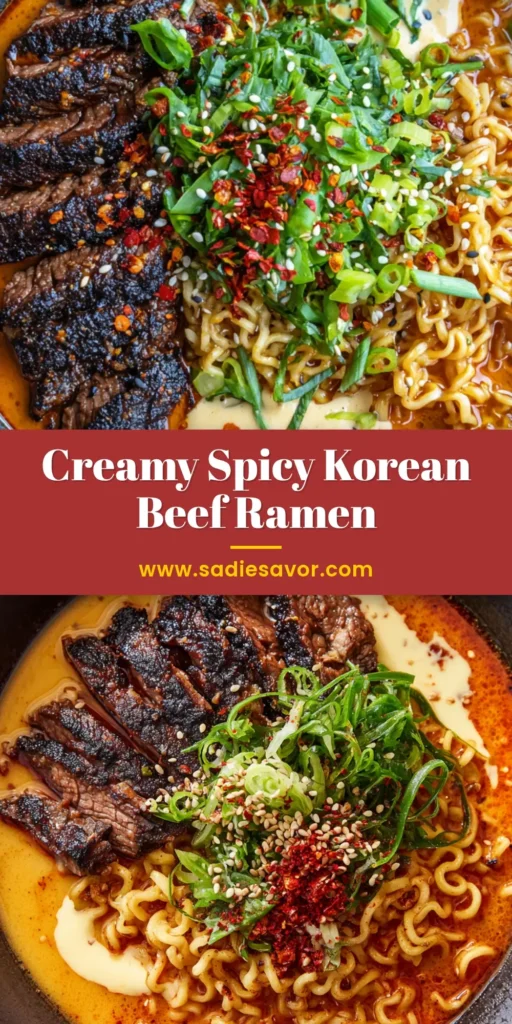
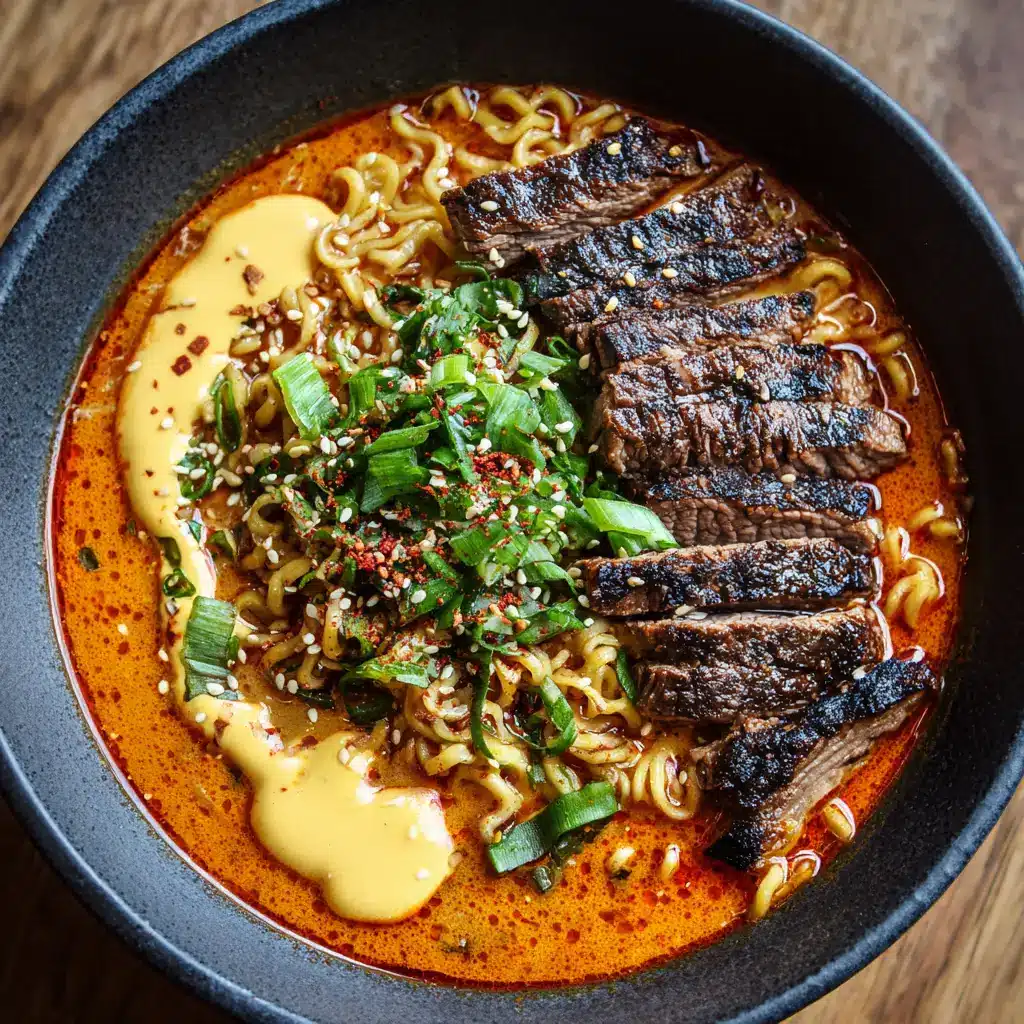
This isn’t just another bowl of noodles; it’s a full sensory experience captured in a single, steaming bowl. Forget the takeout menus. This Spicy Korean Ramen recipe is your guide to creating a masterpiece that looks like it came straight from a professional food photoshoot, featuring a thick, fiery red-orange broth, springy noodles, and perfectly grilled beef with a smoky crust.
The magic is in the details: the generous drizzle of creamy, savory sauce, the bright pop of freshly chopped scallions, and a dusting of toasted sesame seeds. This is the ramen you’ve been dreaming of, and it’s completely achievable in your own kitchen.
Why This Bowl of Ramen Will Ruin All Others For You
This recipe is engineered to deliver on every promise made by its stunning appearance. Here’s what sets it apart:
- The Broth is Everything: We build a broth with layers of deep, savory, and spicy flavor using authentic Korean ingredients. It’s thick, vibrant, and clings to every single noodle.
- Smoky, Charred Perfection: The thinly sliced beef isn’t just boiled or thrown in; it’s marinated and seared at high heat to create a dark, smoky crust that provides incredible texture and flavor contrast.
- A Symphony of Textures: From the chewy, springy noodles to the tender beef, the creamy sauce, and the crisp garnishes, every bite is a complex and satisfying experience.
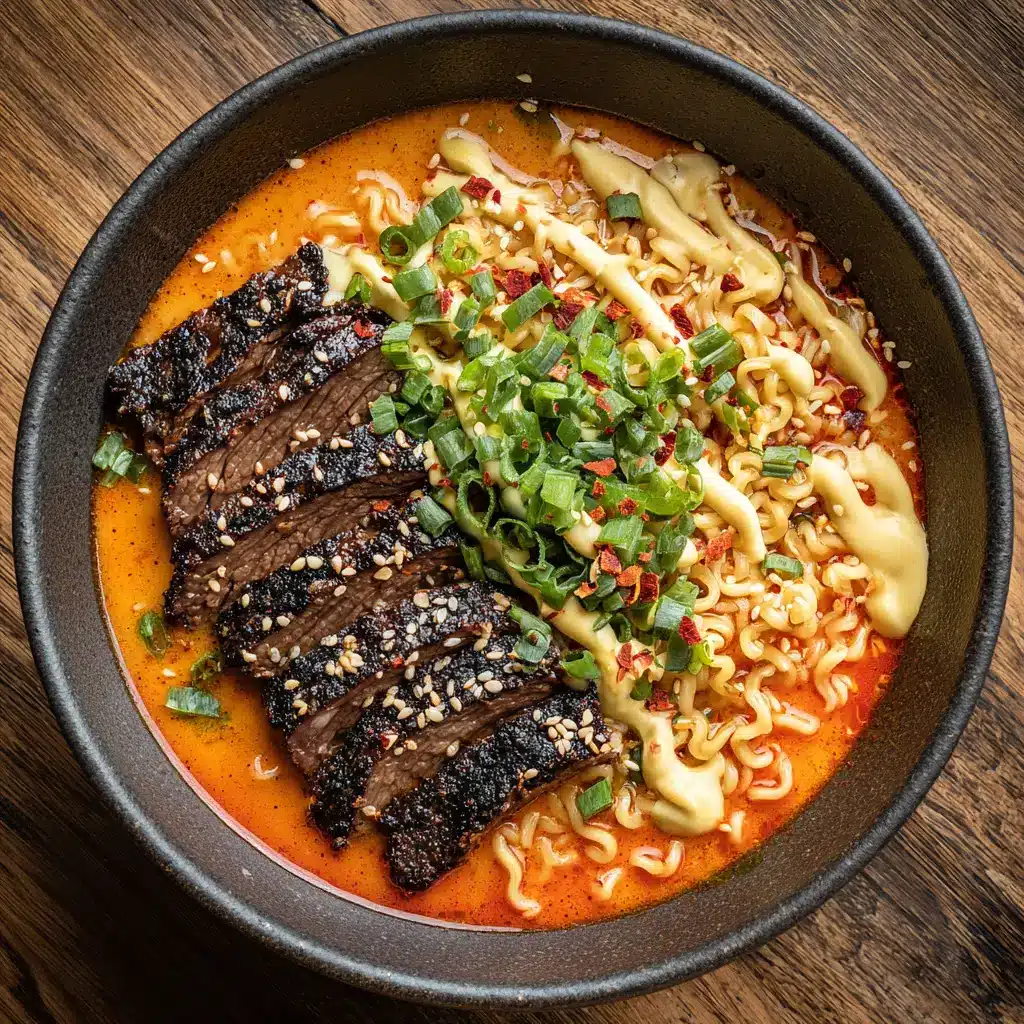
- Visually Stunning: We eat with our eyes first, and this recipe is designed to produce a bowl that looks exactly like the tantalizing pictures, right down to the pale yellow sauce drizzle.
The Building Blocks of a Perfect Fiery Broth & Toppings
Each ingredient is chosen to perfectly replicate the look and taste of our blueprint. Here’s the cast of characters and the role they play.
For the Fiery Broth:
- Low-Sodium Beef Broth: The foundational liquid of our ramen. Using low-sodium gives you control over the final saltiness. 4 cups (960ml)
- Gochujang (Korean Chili Paste): This is the soul of our broth. It provides a deep red color, a touch of sweetness, and a foundational spicy, funky flavor. 3 tbsp (45g)
- Gochugaru (Korean Chili Flakes): These flakes bring the vibrant red-orange color and a clean, smoky heat that is distinctly Korean. 1-2 tbsp (7-14g), depending on your heat preference.
- Soy Sauce: Adds a necessary layer of salty, umami depth to balance the spice. 2 tbsp (30ml)
- Minced Garlic & Grated Ginger: The aromatic backbone. These fresh ingredients provide a sharp, fragrant kick that you can’t get from powders. 1 tbsp minced garlic, 1 tsp grated ginger.
- Sesame Oil: A finishing touch of toasted, nutty aroma that brings everything together. 1 tsp (5ml)
For the Smoky Grilled Beef:
- Flank Steak or Sirloin: You want a cut that is tender when sliced thin and sears well. 8 oz (225g), sliced as thinly as possible against the grain.
- Soy Sauce & Brown Sugar: A classic marinade combination that provides saltiness and helps create a beautiful, dark crust during searing. 2 tbsp (30ml) soy sauce, 1 tsp (4g) brown sugar.
- Minced Garlic: Infuses the meat with a savory, aromatic flavor. 1 clove, minced.
- High-Smoke-Point Oil: You need an oil like avocado or canola oil to get your pan screaming hot without smoking out your kitchen. 1 tbsp (15ml)
Noodles & Final Assembly:
- Korean Ramen Noodles: For that perfect springy, curly texture, use two blocks of dried Korean ramen noodles (from packets, discard the seasoning). 2 packs (about 200g)
- Japanese Mayonnaise (Kewpie): This is the secret to the creamy, pale yellow sauce. It’s richer and tangier than American mayo. 3 tbsp (45g)
- Water: Just a touch to thin the mayonnaise into a perfectly drizzlable consistency. 1-2 tsp (5-10ml)
- Green Scallions: Provides a fresh, sharp, oniony bite and a vibrant green color. 2 stalks, thinly sliced.
- Toasted White Sesame Seeds: Adds a nutty flavor and classic visual appeal. 1 tsp (3g)
- Red Chili Flakes: A final sprinkle for a pop of color and an extra hint of heat. A small pinch.
Essential Tools for Crafting Your Ramen Masterpiece
You don’t need a professional kitchen, but a few key tools will make achieving that picture-perfect result much easier.
- A Heavy-Bottomed Pot or Dutch Oven: For building the broth evenly without scorching the ingredients.
- Cast-Iron Skillet or Grill Pan: Absolutely essential for getting a high-heat sear and that dark, smoky crust on the beef strips.
- Tongs: For flipping the beef and arranging the noodles and toppings in the bowl.
- Small Whisk or Bowl: For creating the smooth, creamy mayonnaise drizzle.
- Two Deep, Dark Ceramic Bowls: Presentation matters! A dark, matte bowl makes the fiery red-orange broth color pop, just like in the photo.
From Simple Ingredients to a Steaming Bowl: The Step-by-Step Method
Follow these phases carefully, paying attention to the sensory cues to build your perfect bowl of Spicy Korean Ramen.
Step 1: Marinating and Searing the Smoky Beef
In a medium bowl, combine the thinly sliced beef with 2 tbsp soy sauce, brown sugar, and minced garlic. Let it marinate for at least 15 minutes while you prepare the other components. Heat the oil in your cast-iron skillet over high heat until it just begins to shimmer.
Place the beef strips in a single layer, being careful not to overcrowd the pan. Sear for 60-90 seconds per side. You are looking for a deep, dark smoky crust to form. Once seared, remove the beef from the pan and set it aside.
Step 2: Forging the Fiery Red-Orange Broth
In your Dutch oven or pot, add the beef broth, gochujang, gochugaru, 2 tbsp soy sauce, minced garlic, and grated ginger. Whisk everything together until the gochujang is fully dissolved. Bring the mixture to a boil, then reduce the heat to a steady simmer.
Let the broth simmer for at least 10-15 minutes to allow the flavors to meld and deepen. You’ll smell the rich, spicy aroma filling your kitchen. Finish by stirring in the sesame oil right before serving.
Step 3: Crafting the Creamy Sauce & Prepping Garnishes
While the broth simmers, prepare your final touches. In a small bowl, whisk the Japanese mayonnaise with 1-2 teaspoons of water until it reaches a smooth, drizzlable consistency. You want it to flow easily off a spoon.
Toast your sesame seeds in a dry pan over medium heat for 1-2 minutes until they are fragrant and lightly golden. Thinly slice your green scallions. Having these ready makes the final assembly quick and easy.
Step 4: Cooking the Noodles & Assembling Your Masterpiece
When you are ready to serve, bring a separate pot of water to a boil and cook the ramen noodles according to package directions, usually about 3-4 minutes. You want them to be springy and chewy, not mushy. Drain the noodles well.
To assemble, divide the cooked noodles between your two deep bowls. Ladle the steaming, fiery broth over the noodles. Neatly arrange the seared beef strips on one side of the bowl. Drizzle the creamy mayonnaise sauce generously over the beef and noodles. Garnish with a sprinkle of toasted sesame seeds, fresh scallions, and a pinch of red chili flakes.
Pro-Tips for Achieving Ramen Nirvana
- Don’t Overcook the Noodles: Ramen noodles cook quickly and can become soggy. Cook them right before you assemble the bowls for the best springy texture.
- Slice Beef When Partially Frozen: For paper-thin beef slices, place your steak in the freezer for 15-20 minutes before slicing. This firms up the meat and makes it much easier to cut thinly.
- Taste and Adjust the Broth: The spice and salt levels are personal. Before assembling, taste your broth and add more gochugaru for heat or a splash of soy sauce for saltiness if needed.
- High Heat is Non-Negotiable for the Beef: Do not be afraid to get your pan screaming hot. This is the only way to achieve the smoky char described in the blueprint without overcooking the thin slices of beef.
Storing and Reheating Your Spicy Korean Ramen
This ramen is best enjoyed immediately. However, if you have leftovers, it’s crucial to store the components separately to avoid soggy noodles. Store the broth, cooked beef, and noodles in separate airtight containers in the refrigerator for up to 2 days.
To reheat, bring the broth back to a simmer on the stovetop. You can briefly dip the noodles in the hot broth to warm them or pour the hot broth directly over them in a bowl. Add the beef to the broth for the last minute of heating to warm it through without making it tough.
What to Serve with Your Korean Ramen Creation
While this Spicy Korean Ramen is a complete meal in a bowl, a few small side dishes can round out the experience. The fresh crunch of a simple cucumber salad or some quick-pickled radishes can be a wonderful contrast.
If you’re looking for more inspiration for bold, satisfying meals, you might also love the flavors in our High Protein Egg Roll in a Bowl. For another noodle adventure, check out this amazing Creamy Spicy Chicken Ramen. And if you love Asian-inspired handhelds, these Thai Basil Beef Rolls are a must-try.
Answering Your Top Ramen Questions
Yes, this recipe is designed to work perfectly with the noodle block from instant ramen packets. We recommend discarding the included seasoning packet and building your own flavorful broth according to our recipe for a much richer, more authentic result.
Absolutely. This recipe would be fantastic with thinly sliced pork shoulder, chicken thighs, or even firm tofu. For shrimp, add them directly to the simmering broth for the last 2-3 minutes of cooking until they are pink and opaque.
The heat comes from the gochujang and gochugaru. To make it less spicy, start with half the amount of gochugaru (about 1/2 tbsp) and use a mild gochujang paste. You can always add more at the end if you want more heat.
Gochujang is a fermented Korean chili paste that’s savory, sweet, and spicy. Gochugaru are Korean chili flakes with a smoky flavor. For the most authentic taste, there are no perfect substitutes, but in a pinch, you could use a mix of Sriracha and a little miso paste for gochujang, and a mix of cayenne and smoked paprika for gochugaru, though the flavor will be different.
The biggest difference is often the broth and noodles. Korean ramyeon typically features a spicier, bolder broth, often using ingredients like gochujang and kimchi, and relies on instant-style curly noodles. Japanese ramen has a wider variety of broth bases (like shio, shoyu, miso, tonkotsu) and often uses fresh, straight noodles.
Your Printable Guide to the Ultimate Spicy Korean Ramen
Spicy Korean Ramen Recipe with Fiery Broth & Grilled Beef
Ingredients
Equipment
Instructions
- In a medium bowl, combine the thinly sliced beef with 2 tbsp soy sauce, brown sugar, and 1 minced garlic clove. Let it marinate for at least 15 minutes. Heat oil in a cast-iron skillet over high heat until shimmering. Sear beef strips for 60-90 seconds per side until a dark, smoky crust forms. Remove from pan and set aside.
- In a Dutch oven or pot, whisk together beef broth, gochujang, gochugaru, 2 tbsp soy sauce, 1 tbsp minced garlic, and grated ginger. Bring to a boil, then reduce heat and simmer for 10-15 minutes. Stir in the sesame oil right before serving.
- In a small bowl, whisk the Japanese mayonnaise with 1-2 teaspoons of water until it reaches a smooth, drizzlable consistency. In a dry pan over medium heat, toast the sesame seeds until fragrant (1-2 minutes). Thinly slice the green scallions.
- In a separate pot of boiling water, cook the ramen noodles according to package directions (usually 3-4 minutes). Drain well. Divide noodles between two bowls. Ladle the hot broth over the noodles. Arrange the seared beef on one side, drizzle with the creamy mayo sauce, and garnish with toasted sesame seeds, fresh scallions, and a pinch of red chili flakes.
Notes
Slice Beef When Partially Frozen: For paper-thin beef slices, place your steak in the freezer for 15-20 minutes before slicing.
Taste and Adjust the Broth: Add more gochugaru for heat or a splash of soy sauce for saltiness if needed before serving.
High Heat is Non-Negotiable for the Beef: This is the only way to achieve the smoky char without overcooking the thin slices of beef.
Share Your Masterpiece!
Now that you’ve crafted this stunning bowl of Spicy Korean Ramen, it’s time to show it off! We love seeing your creations.
If you made this recipe, please leave a comment and rating below. Your feedback helps us and other home cooks. Don’t forget to save this recipe to your favorite board on Pinterest!