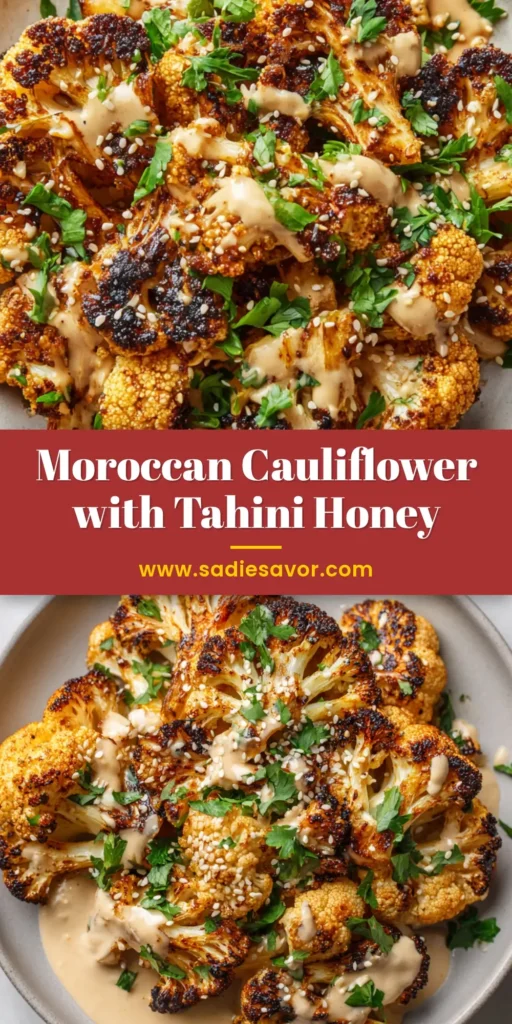
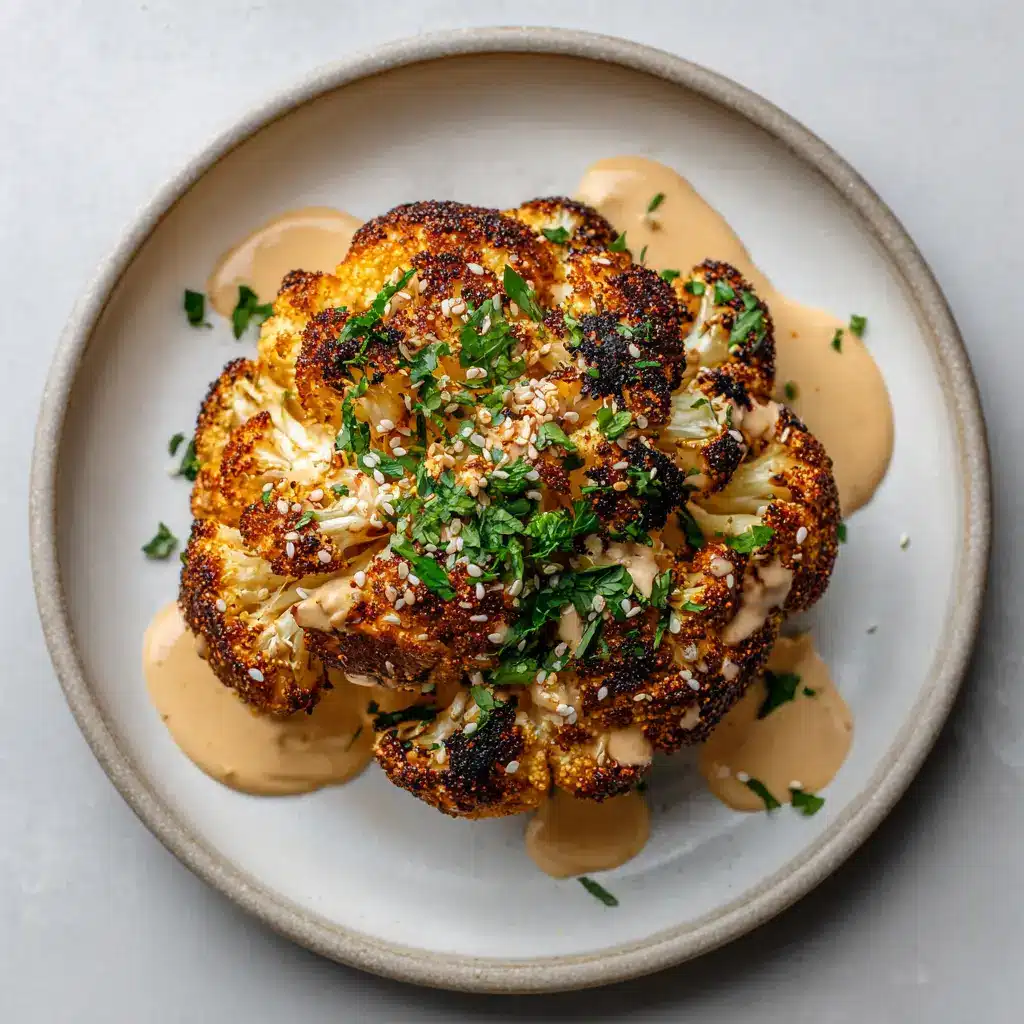
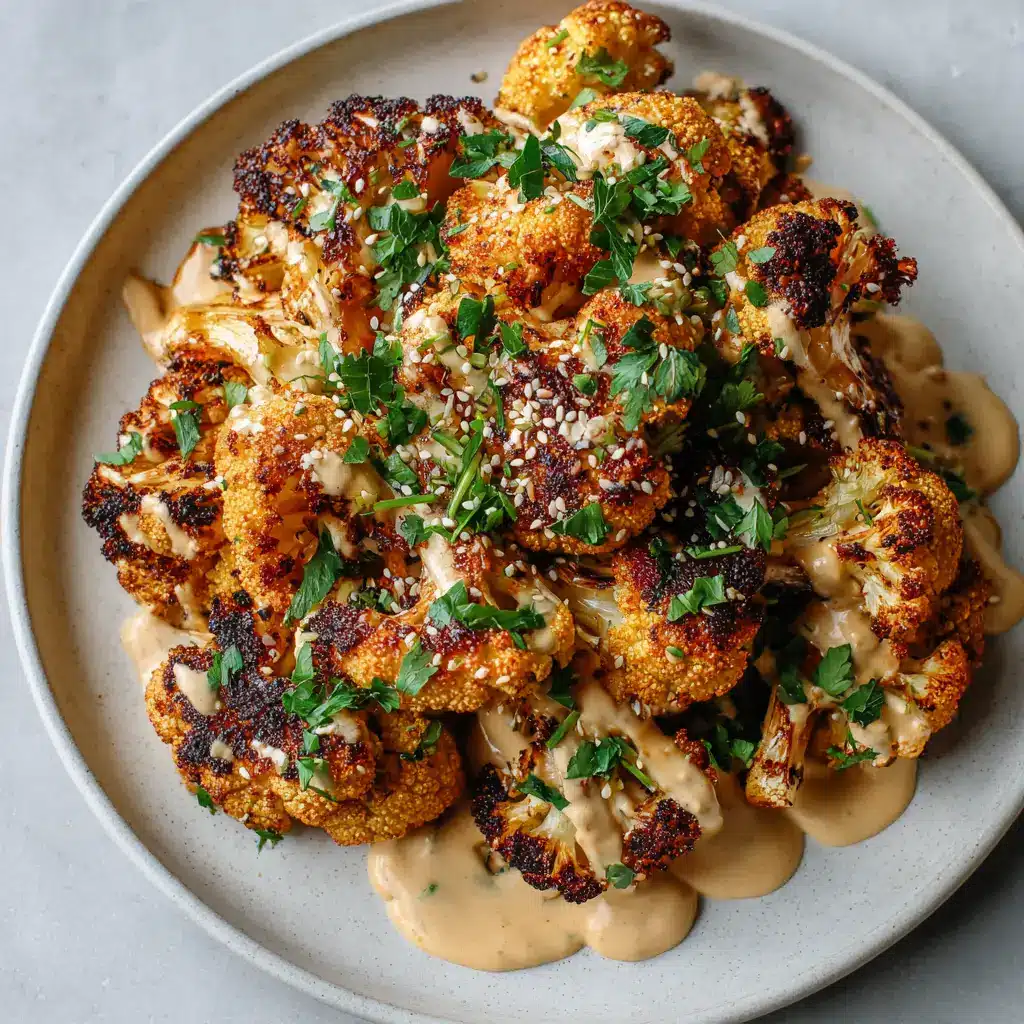
This isn’t just another roasted vegetable dish. This is a journey of texture and flavor, a recipe for Moroccan Cauliflower that transforms a humble vegetable into the star of your plate. Imagine florets roasted to perfection, with deeply caramelized and charred crispy edges, all enveloped in a warm, golden-brown spice blend. Each bite is a delightful contrast between the tender cauliflower, the crispy bits, and the generous drizzle of a thick, glossy, pale beige tahini-honey sauce that pools tantalizingly at the base. Finished with a vibrant sprinkle of fresh parsley and toasted sesame seeds, this dish looks exactly like a photo taken on a whim—effortlessly beautiful and incredibly delicious.
We’re aiming for a specific kind of perfection here. The kind you can see in that unedited, handheld smartphone photo style—real, rustic, and ridiculously appetizing. It’s a dish designed to impress your senses before you even take the first bite.
Why This Moroccan Cauliflower Recipe Will Become Your New Favorite
This recipe is more than just a list of instructions; it’s a blueprint for creating a culinary masterpiece in your own kitchen. Here’s what makes it so special:
- A Symphony of Textures: We don’t just roast; we aim for a specific outcome. The high-heat method ensures the cauliflower becomes deeply tender on the inside while developing those coveted deeply caramelized and crispy charred edges that provide an irresistible crunch.
- Rich & Aromatic Spice Coating: The warm golden-brown spice blend isn’t just for color. It’s a carefully balanced mix of Moroccan-inspired spices that creates a savory, earthy, and slightly smoky crust on every single floret.
- Luxuriously Creamy Sauce: The tahini-honey sauce is the perfect counterpoint to the spiced cauliflower. It’s thick, glossy, and provides a sweet and nutty richness that balances the earthy spices beautifully.
- Visually Stunning Presentation: Garnished with bright green fresh parsley and toasted sesame seeds, this dish is a feast for the eyes, served beautifully on a rustic plate, just as envisioned. It’s simple enough for a weeknight but elegant enough for guests.
The Golden Spice Blend and Creamy Drizzle Ingredients
To achieve the exact look and taste, we need a specific set of ingredients. Each one plays a crucial role in building the layers of flavor and texture that make this Moroccan Cauliflower unforgettable.
For the Charred Cauliflower Florets:
Cauliflower: One large head of cauliflower is our canvas. We’ll break it down into bite-sized florets, creating plenty of surface area for that gorgeous spice coating and char. Using a fresh, firm head is key to a tender-crisp result.
Olive Oil: Extra virgin olive oil is essential for roasting. It helps the spices adhere to the cauliflower and allows the florets to achieve that deep golden-brown color and crispy texture without burning.
The Moroccan Spice Blend: This is where the magic happens. We use a combination of smoked paprika for color and smokiness, ground cumin for earthiness, ground coriander for a citrusy warmth, and turmeric for its vibrant golden hue. These spices create the signature “warm golden-brown spice coating.”
Salt & Black Pepper: These are foundational flavor enhancers. Kosher salt and freshly ground black pepper awaken the other spices and season the cauliflower from the inside out.
For the Tahini-Honey Sauce & Garnish:
Tahini: This sesame seed paste is the heart of our sauce. A good quality, runny tahini will create a smooth, pale beige sauce that’s both nutty and rich.
Honey: Honey provides the sweetness to balance the slight bitterness of the tahini. This combination creates that addictive sweet-and-savory flavor profile and contributes to the sauce’s glossy finish.
Lemon Juice: Freshly squeezed lemon juice is non-negotiable. It adds a bright, acidic note that cuts through the richness of the tahini and honey, making the sauce feel light and vibrant.
Warm Water: This is our secret to achieving the perfect consistency. We’ll add it slowly to thin the sauce just enough so it’s thick but easily drizzled, allowing it to pool slightly at the base.
Fresh Parsley: We need finely chopped, bright green fresh parsley. This isn’t just a garnish; its fresh, herbaceous flavor provides a clean contrast to the warm spices and rich sauce.
Sesame Seeds: Toasted white sesame seeds add a final layer of texture and a subtle, nutty crunch. We’ll toast them ourselves to bring out their maximum flavor. It is a detail that makes a huge difference, much like in our Honey Garlic Shrimp recipe.
Essential Tools for Perfect Roasting
You don’t need any fancy equipment to make this stunning dish. Having the right basic tools will ensure you get the perfect char and texture every time.
- Large Baking Sheet: A large, heavy-duty baking sheet is crucial. It gives the cauliflower florets enough space to roast instead of steam, which is the secret to getting those crispy edges. If they are too crowded, you won’t get the desired result, a tip that also applies to making perfectly caramelized Brussels sprouts.
- Large Mixing Bowl: For evenly coating the cauliflower florets with the oil and spice mixture.
- Small Whisk: To create a perfectly smooth and emulsified tahini-honey sauce.
- Sharp Knife: For chopping the cauliflower and finely chopping the parsley.
Crafting Your Moroccan Cauliflower: A Step-by-Step Guide
Follow these steps closely to replicate the exact textures and flavors. We’ll pay close attention to the sensory cues that tell you you’re on the right track.
Part 1: Preparing and Spicing the Cauliflower
First, preheat your oven to 425°F (220°C). Position a rack in the lower third of the oven to help the bottom of the cauliflower brown nicely. In a large bowl, whisk together the olive oil, smoked paprika, cumin, coriander, turmeric, salt, and pepper. Add your cauliflower florets and toss thoroughly until every piece is evenly coated in that beautiful, fragrant, golden-brown spice mixture.
Part 2: The High-Heat Roasting Process
Spread the coated cauliflower in a single layer on your large baking sheet. Visual Cue: Make sure there’s space between the florets. This is the most important step for achieving those charred, crispy edges. Roast for 20-25 minutes, flipping halfway through. You’re looking for deep caramelization and crispy, almost-burnt tips. The aroma should be intensely nutty and spicy. This roasting technique is key, just like when making our classic crispy cauliflower.
Part 3: Whipping Up the Glossy Tahini-Honey Sauce
While the cauliflower roasts, prepare the sauce. In a small bowl, whisk together the tahini, honey, and lemon juice. Sensory Cue: It will seize up and become very thick at first; this is normal. Add the warm water, one tablespoon at a time, whisking continuously until you have a smooth, thick, but pourable sauce. The color should be a pale, creamy beige, and it should be glossy. Season with a small pinch of salt to taste.
Part 4: The Final Assembly and Garnish
Arrange the hot, roasted cauliflower on your shallow rustic matte white ceramic plate, creating a mound. Drizzle the tahini-honey sauce generously over the top, letting it cascade down the sides and pool at the bottom. Immediately sprinkle with the toasted sesame seeds and the finely chopped fresh parsley. Serve warm and enjoy the incredible symphony of flavors and textures.
Pro Secrets for Foolproof Moroccan Cauliflower Every Time
Here are a few expert tips to ensure your dish is perfect every single time.
- Don’t Crowd the Pan: This is the golden rule of roasting. If the florets are too close together, they will steam and become soft rather than crispy and charred. Use two pans if necessary.
- Ensure Your Cauliflower is Dry: After washing your cauliflower, make sure it’s completely dry before tossing it with the oil and spices. Excess moisture is the enemy of crispiness.
- Toast Your Own Sesame Seeds: It takes just 2-3 minutes in a dry skillet over medium heat. Keep them moving until they are fragrant and lightly golden. This small step makes a huge difference in flavor.
- Adjust Sauce Consistency: Tahini brands can vary in thickness. Don’t be afraid to add a little more warm water or a touch more lemon juice to get the perfect drizzling consistency for your sauce.
Storing, Reheating, and Freezing Instructions
This Moroccan Cauliflower is best enjoyed fresh, but here’s how to handle leftovers.
To Store: Store the roasted cauliflower and the tahini sauce in separate airtight containers in the refrigerator for up to 3 days. Storing them separately prevents the cauliflower from becoming soggy.
To Reheat: For the best texture, reheat the cauliflower on a baking sheet in a 400°F (200°C) oven or in an air fryer for 5-7 minutes, until heated through and re-crisped. Avoid the microwave, as it will make it soft. Drizzle with the cold sauce after reheating.
Freezing: We do not recommend freezing this dish. The texture of both the cauliflower and the sauce will be compromised upon thawing.
What to Serve With This Moroccan Cauliflower
While this dish is a fantastic standalone vegetarian main or appetizer, it also pairs beautifully with a variety of meals. Serve it alongside grilled meats like our Easy Greek Chicken Bowls for a complete Mediterranean-inspired feast. It’s also an excellent side dish for a simple, elegant main course like Marry Me Salmon. The warm spices and creamy sauce complement the richness of the fish perfectly. You could even build a larger vegetarian spread with other flavorful sides.
Frequently Asked Questions About This Recipe
Here are answers to some common questions to help you on your way.
Yes, absolutely. To cook in an air fryer, toss the cauliflower as directed and cook at 400°F (200°C) for about 12-15 minutes, shaking the basket halfway through, until crispy and charred to your liking.
This recipe can easily be made vegan by substituting the honey in the sauce with an equal amount of maple syrup or agave nectar. The taste and consistency will be very similar.
The key to crispy cauliflower is high heat (425°F / 220°C), making sure the florets are completely dry, and not overcrowding the pan. Giving the cauliflower space allows it to roast and char, rather than steam.
The tahini sauce can be stored in an airtight container in the refrigerator for up to 5 days. It may thicken when chilled, so you might need to whisk in a teaspoon of warm water to bring it back to a drizzling consistency.
Moroccan spice blends, like Ras el Hanout, often feature warm, earthy spices. Our blend uses common staples like cumin, coriander, smoked paprika, and turmeric to capture that signature aromatic and golden flavor profile.
Your Printable Guide to Perfect Moroccan Cauliflower
Here is the complete recipe, ready for your kitchen. Every detail is designed to help you create this stunning and delicious dish at home.
Moroccan Cauliflower with Crispy Charred Edges & Tahini-Honey Drizzle
Ingredients
Equipment
Instructions
- Preheat oven to 425°F (220°C). In a large bowl, whisk together the olive oil, smoked paprika, cumin, coriander, turmeric, salt, and pepper.
- Add the cauliflower florets to the bowl with the spice mixture and toss until evenly and thoroughly coated.
- Spread the cauliflower in a single layer on a large baking sheet, ensuring the florets aren't crowded. Roast for 20-25 minutes, flipping halfway, until tender with deeply caramelized and charred edges.
- While the cauliflower is roasting, whisk together the tahini, honey, and lemon juice in a small bowl. Slowly whisk in the warm water, one tablespoon at a time, until the sauce is smooth, thick, and pourable. Season with a pinch of salt.
- Arrange the roasted cauliflower on a serving plate. Drizzle generously with the tahini-honey sauce. Garnish with finely chopped fresh parsley and toasted sesame seeds and serve immediately.
Notes
Ensure Your Cauliflower is Dry: After washing your cauliflower, make sure it's completely dry before tossing it with the oil and spices. Excess moisture is the enemy of crispiness.
Toast Your Own Sesame Seeds: It takes just 2-3 minutes in a dry skillet over medium heat. Keep them moving until they are fragrant and lightly golden. This small step makes a huge difference in flavor.
Share Your Creations!
We can’t wait to see your take on this Moroccan Cauliflower. If you make this recipe, let us know how it turned out in the comments below! Don’t forget to save this recipe to your favorite board on Pinterest so you can find it again.