Prepare yourself for the ultimate comfort food fusion: the Korean Pot Roast. This recipe transforms a classic, humble pot roast into an extraordinary meal, brimming with the bold, savory, and slightly sweet flavors of Korean cuisine. We’re talking about incredibly tender, fall-apart beef braised in a rich, aromatic sauce made with gochujang, soy sauce, and Asian pear. It’s a true showstopper that’s surprisingly easy to make. If you love dishes with complex, layered flavors like our Gochujang Miso Chicken, you are going to fall head over heels for this pot roast.
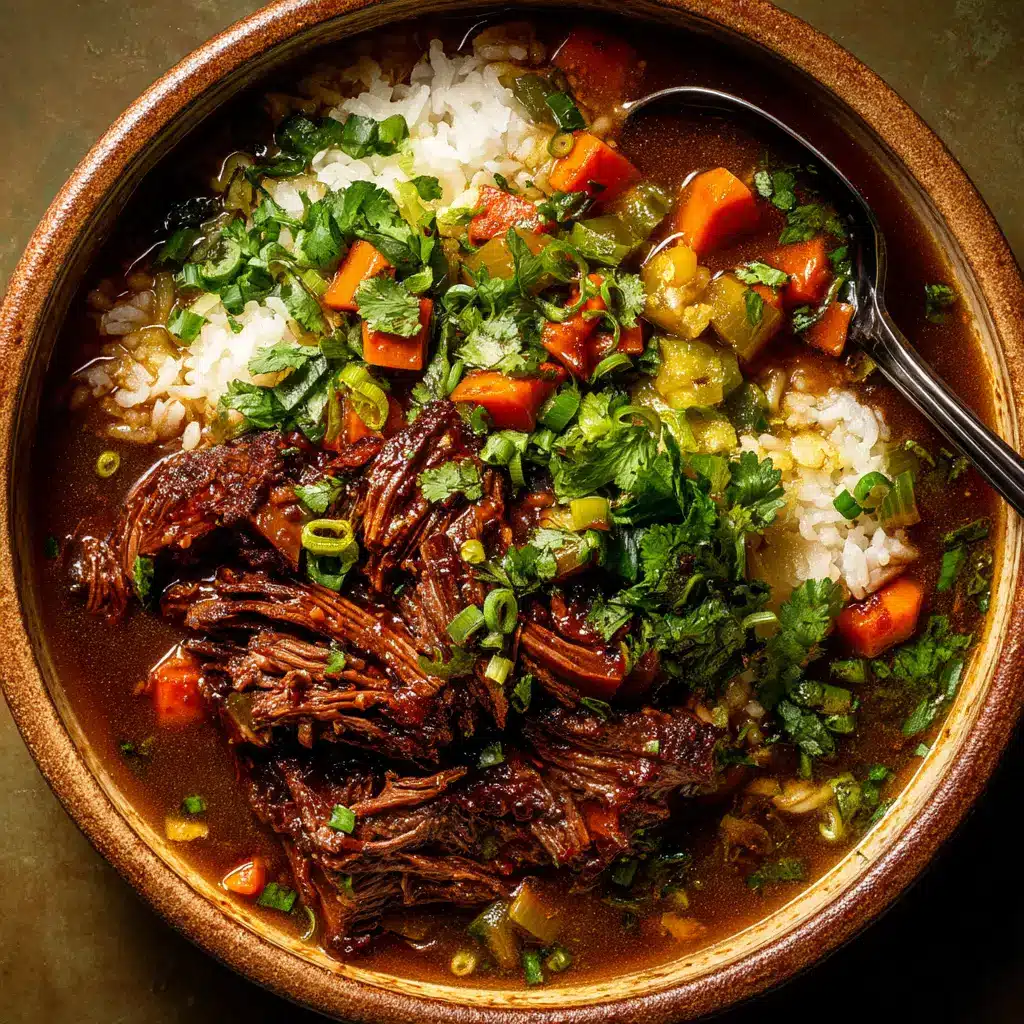
What Makes This Korean Pot Roast Irresistible?
Forget everything you know about traditional pot roast. This isn’t your grandmother’s Sunday dinner—it’s a vibrant and modern take that will excite your taste buds. The magic lies in the braising liquid, a perfectly balanced concoction of iconic Korean ingredients that tenderizes the beef to perfection while infusing it with unparalleled flavor.
Unlike a typical pot roast that relies on wine and beef broth, this recipe uses a dynamic blend of soy sauce for umami, gochujang (Korean chili paste) for a gentle, smoky heat, and grated Asian pear for a subtle sweetness that also acts as a natural tenderizer. The result is a succulent, melt-in-your-mouth Korean Pot Roast that is deeply savory with a whisper of spice and sweetness. It’s a complete meal that will have everyone asking for seconds.
Key Ingredients for Success
Crafting the perfect Korean Pot Roast starts with quality ingredients. Each component plays a crucial role in building the signature flavor profile. Here’s what you’ll need and why it matters.
For the Beef:
- Chuck Roast: This is the star of the show. A 3-4 pound boneless chuck roast is ideal due to its excellent marbling, which breaks down during the long, slow cooking process, creating incredibly tender and juicy meat.
- Avocado Oil: Used for searing the beef. It has a high smoke point, perfect for creating a deep, brown crust on the roast without burning.
- Salt and Black Pepper: For seasoning the beef before searing, creating the first layer of flavor.
For the Braising Sauce:
- Beef Broth: The foundational liquid for our sauce. Use a low-sodium version to better control the final saltiness.
- Low-Sodium Soy Sauce: Provides the essential savory, umami backbone of the sauce.
- Gochujang: This Korean fermented chili paste is the heart of the recipe’s flavor, adding a mild, smoky heat and a touch of sweetness.
- Rice Vinegar: Adds a hint of acidity to cut through the richness of the sauce and brighten the flavors.
- Toasted Sesame Oil: Brings a nutty, aromatic fragrance that is quintessentially Korean.
- Asian Pear: Grated pear adds a natural sweetness and contains enzymes that help tenderize the beef. A Fuji or Gala apple can be substituted.
- Garlic and Ginger: Freshly minced garlic and ginger create an aromatic and pungent base that infuses the entire dish.
- Onion and Scallions: A roughly chopped yellow onion adds sweetness as it cooks down, while scallions provide a fresh, sharp finish.
For the Vegetables:
- Carrots and Daikon Radish: These root vegetables become wonderfully tender and absorb the delicious flavors of the braising liquid.
- Shiitake Mushrooms: Add a deep, earthy, and umami flavor that complements the beef perfectly.
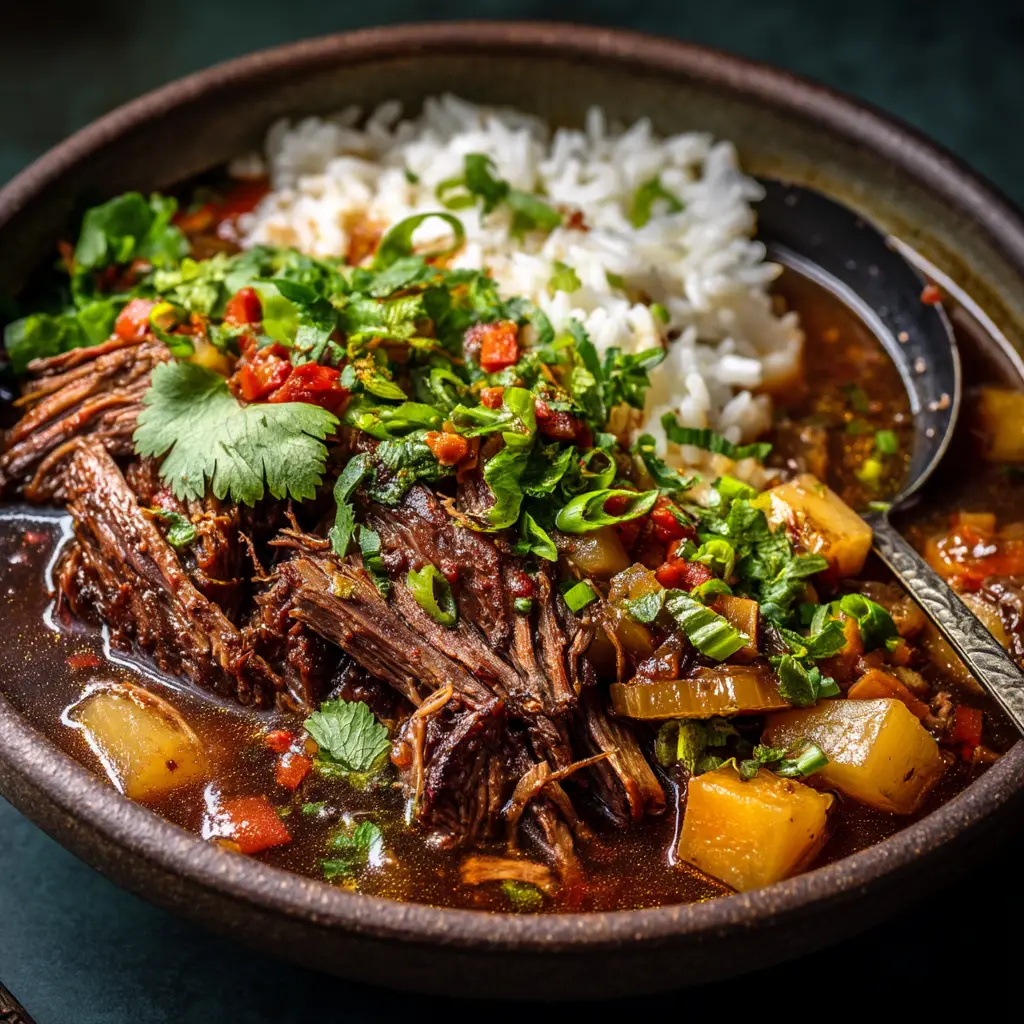
Step-by-Step Guide to the Perfect Korean Pot Roast
Follow these simple steps to create a show-stopping meal. The key is patience—let the low and slow braise do its magic.
Step 1: Prepare and Sear the Beef
First, preheat your oven to 325°F (165°C). Pat the chuck roast completely dry with paper towels; this is crucial for getting a good sear. Season it generously on all sides with salt and pepper. Heat the avocado oil in a large Dutch oven or heavy-bottomed pot over medium-high heat. Carefully place the roast in the hot pot and sear for 4-5 minutes per side, until a deep, brown crust forms. This step builds immense flavor. Once seared, remove the beef and set it aside.
Step 2: Build the Braising Liquid
In the same pot, reduce the heat to medium. If needed, add a touch more oil. Add the chopped onion and cook for 3-4 minutes until it begins to soften. Add the minced garlic and ginger and cook for another minute until fragrant. Whisk in the beef broth, soy sauce, gochujang, rice vinegar, and sesame oil. Scrape up any browned bits from the bottom of the pot—that’s pure flavor! Finally, stir in the grated Asian pear.
Step 3: The Slow Braise
Return the seared chuck roast to the pot, nestling it into the sauce. Add the carrots, daikon radish, and shiitake mushrooms, arranging them around the beef. Bring the liquid to a simmer, then cover the pot with a tight-fitting lid. Transfer the entire pot to the preheated oven. Let it braise for 3 to 3.5 hours, or until the meat is fork-tender and easily shreds.
Step 4: Rest and Serve
Once cooked, carefully remove the pot from the oven. Let the roast rest in the liquid for about 15-20 minutes. This allows the juices to redistribute, ensuring the meat is moist and flavorful. You can shred the beef directly in the pot or transfer it to a cutting board to slice or shred. Serve the Korean Pot Roast warm, spooning plenty of the rich sauce and vegetables over the top. Garnish with fresh, chopped scallions and sesame seeds for a final touch of flavor and texture.
Tips for an Unforgettable Pot Roast
- Don’t Skip the Sear: Searing the beef creates the Maillard reaction, which is essential for developing the deep, savory flavor foundation of the dish.
- Low and Slow is Key: The magic of a great pot roast is in the slow cooking time, which breaks down the tough connective tissues in the chuck roast, making it incredibly tender.
- Let It Rest: Allowing the meat to rest after cooking is just as important as the cooking itself. This step guarantees a juicy, succulent result every time.
- Sauce Thickness: If you prefer a thicker sauce, you can remove the cooked roast and vegetables, then bring the remaining liquid to a simmer on the stovetop. Whisk in a slurry of one tablespoon of cornstarch mixed with two tablespoons of cold water and let it bubble for a minute until thickened.
What to Serve With Your Roast
This Korean Pot Roast is fantastic served over a bed of fluffy steamed rice to soak up all the delicious sauce. For a lower-carb option, it pairs wonderfully with cauliflower rice or quinoa. For a side dish that provides a delightful contrast, consider our Crispy Garlic Butter Potatoes. A simple side of steamed greens like bok choy or even some quick-sautéed green beans would also be an excellent complement.
Storage and Reheating Instructions
Leftovers are one of the best parts of making a pot roast! Store any remaining beef and vegetables in an airtight container with the sauce in the refrigerator for up to 4 days. The flavors will continue to meld and often taste even better the next day.
To reheat, simply place the desired amount in a saucepan over medium-low heat until warmed through. You can also microwave it, but gentle reheating on the stove top best preserves the texture of the meat.
Frequently Asked Questions
Absolutely! After searing the beef and sautéing the aromatics on the stove, transfer everything to your slow cooker. Cook on low for 8-10 hours or on high for 4-5 hours, until the beef is tender.
Store leftovers in an airtight container in the refrigerator for up to 4 days. Reheat gently in a saucepan over medium-low heat or in the microwave until warmed through. The flavor is often even better the next day!
This recipe has a mild, gentle heat from the gochujang, which provides more of a smoky, savory depth than intense spiciness. It’s generally well-tolerated by most palates. For more heat, you can add an extra tablespoon of gochujang.
If you can’t find Daikon radish, you can substitute it with turnips or even potatoes. Cut them into similar 2-inch chunks. The flavor will be slightly different but still delicious.
The best cut is a boneless chuck roast. Its marbling and connective tissue break down during the slow braising process, resulting in incredibly tender, flavorful, and moist meat.
Your New Favorite Pot Roast Awaits
This Korean Pot Roast recipe is more than just a meal; it’s an experience. It’s the perfect dish for a cozy family dinner, a weekend gathering, or whenever you’re craving something deeply comforting with a unique and exciting twist. The tender beef and rich, savory-sweet sauce are guaranteed to win over everyone at your table.
We’d love to see your creations! If you make this recipe, please leave a comment below or share a photo of your masterpiece on Pinterest!
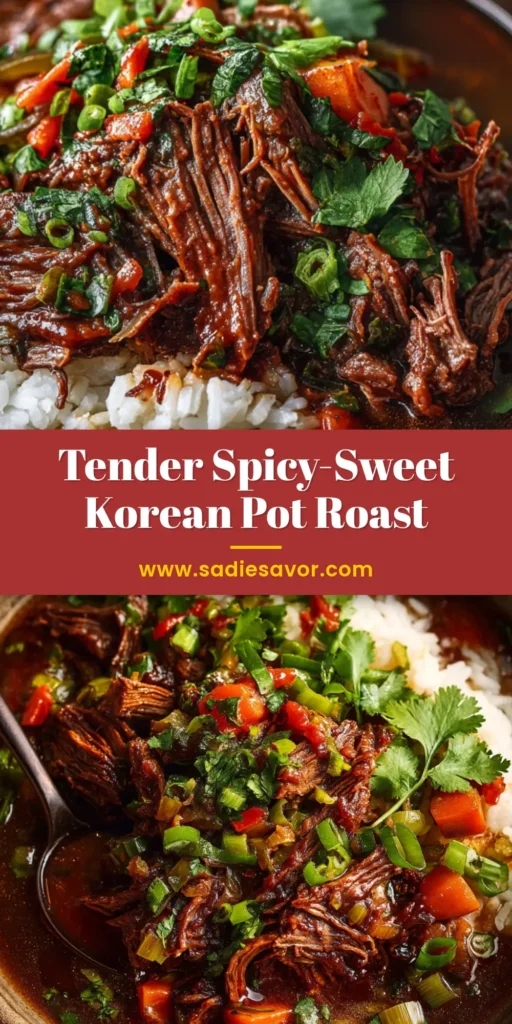
Korean Pot Roast Recipe
Korean Pot Roast: A Tender, Flavor-Packed One-Pot Meal
Ingredients
Equipment
Instructions
- Preheat your oven to 325°F (165°C). Pat the chuck roast completely dry with paper towels and season generously on all sides with salt and pepper.
- Heat avocado oil in a large Dutch oven over medium-high heat. Sear the roast for 4-5 minutes per side, until a deep brown crust forms. Remove the beef from the pot and set aside.
- Reduce heat to medium. Add the chopped onion and cook for 3-4 minutes until softened. Add minced garlic and ginger, cooking for another minute until fragrant. Whisk in the beef broth, soy sauce, gochujang, rice vinegar, sesame oil, and grated Asian pear. Scrape the bottom of the pot to release any browned bits.
- Return the beef to the pot. Add the carrots, daikon, and shiitake mushrooms around the roast. Bring to a simmer, then cover with a tight-fitting lid and transfer to the preheated oven. Braise for 3 to 3.5 hours, or until the meat is fork-tender.
- Remove the pot from the oven and let the roast rest in the liquid for 15-20 minutes. Shred or slice the beef and serve warm with the vegetables and plenty of sauce. Garnish with chopped scallions and toasted sesame seeds.
Notes
Tip 2: This dish is even better the next day! The flavors have more time to meld together, making the leftovers fantastic.
Tip 3: If you cannot find Asian pear, a sweet apple like a Fuji or Gala makes a good substitute.