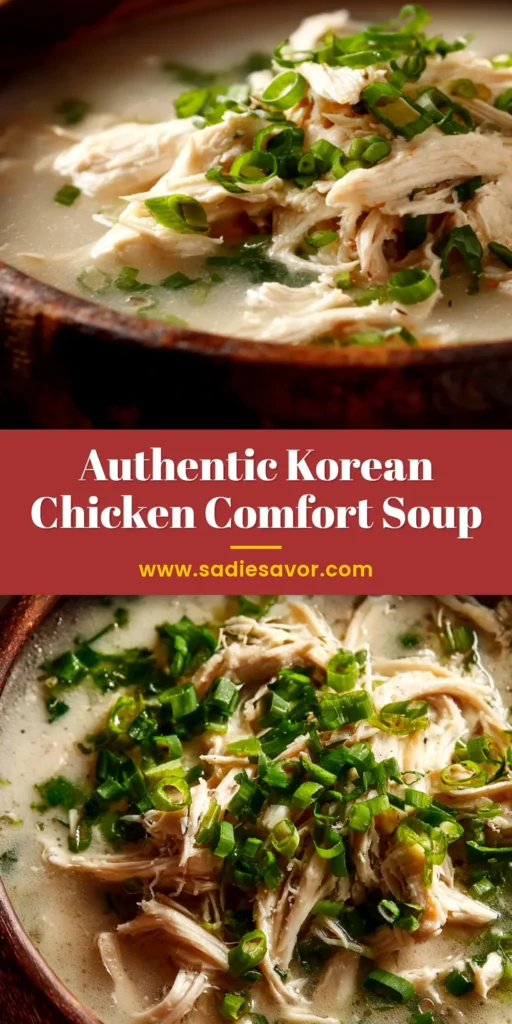
There is nothing more comforting than a bowl of rich, nourishing soup, and this Dak Gomtang recipe is the pinnacle of soul-warming Korean cuisine. This traditional Korean chicken soup features a surprisingly simple list of ingredients that transform into a luxuriously milky, deeply savory broth. It’s a restorative meal that feels like a warm hug from the inside out.
If you’ve ever felt intimidated by making Korean soups at home, this Dak Gomtang recipe is the perfect place to start. We will walk through every step, ensuring you achieve that signature creamy broth and tender, fall-off-the-bone chicken. It’s a dish that’s both elegant in its simplicity and profound in its flavor.
What is Dak Gomtang?
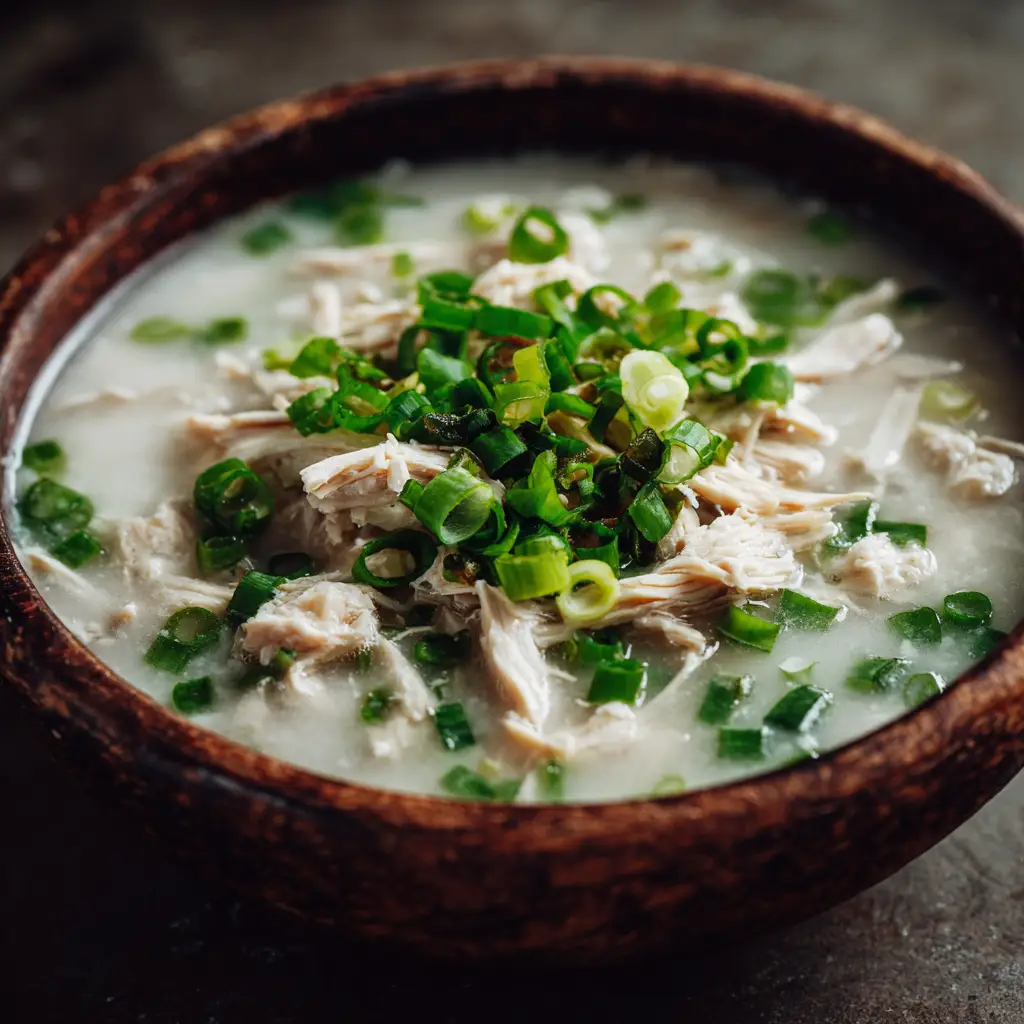
Dak Gomtang (닭곰탕) translates to “chicken bone soup.” It’s a traditional Korean soup made by simmering a whole chicken for an extended period until the meat is incredibly tender and the broth becomes rich and milky. Unlike its more famous cousin, Samgyetang, which is stuffed with glutinous rice, ginseng, and jujubes for a more herbal flavor, Dak Gomtang focuses purely on the essence of the chicken. The result is a clean, yet intensely flavorful soup that serves as a perfect canvas for simple seasonings like salt, pepper, and fresh scallions.
Why You’ll Love This Dak Gomtang Recipe
- Simple Ingredients: You only need a whole chicken and a few aromatics to create a broth that tastes like it simmered for days.
- Deeply Nourishing: This soup is renowned for its restorative properties, making it perfect for a cold day or when you’re feeling under the weather.
- Incredibly Flavorful: The slow-simmering process extracts every bit of flavor from the chicken, resulting in a broth that is savory and satisfying.
- Family-Friendly: Its mild and clean flavor profile makes it a favorite for all ages, from children to adults.
Key Ingredients for Authentic Dak Gomtang
The beauty of Dak Gomtang lies in its simplicity. You don’t need a long list of ingredients to create this masterpiece.
- Whole Chicken: A medium-sized chicken (about 3-4 lbs) is perfect. Using a whole chicken with bones and skin is essential for a rich, collagen-filled broth.
- Aromatics: A whole onion, a few cloves of garlic, and ginger slices are all you need to build the foundational flavor of the broth.
- Water: The primary liquid. Use cold, filtered water for the cleanest taste.
- For Serving: Cooked short-grain rice, chopped scallions, fine sea salt, and black pepper are classic accompaniments.
How to Make Dak Gomtang (Step-by-Step)
Follow these simple steps to create a perfect bowl of Korean chicken soup. The key is patience, allowing the chicken to simmer slowly to release all its flavor.
1. Prepare and Clean the Chicken
Start by thoroughly cleaning the chicken. Remove any giblets from the cavity. Trim away any excess fat, especially around the tail area. Give the chicken a good rinse under cold water. This initial prep ensures a clean-tasting broth.
2. Initial Boil (Scum Removal)
Place the whole chicken in a large stockpot and cover it with cold water. Bring it to a rolling boil over high heat. Let it boil for about 5 minutes. You will see foam and impurities rise to the surface. This step is crucial for a clear, clean broth. Carefully discard the water and rinse the chicken and the pot to remove all the scum.
3. Simmer for Flavor
Return the cleaned chicken to the pot. Add the onion, garlic cloves, and ginger. Cover with 12-14 cups of fresh, cold water. Bring to a boil, then immediately reduce the heat to a gentle simmer. Cover the pot and let it simmer for at least 1.5 to 2 hours. Do not rush this process; the slow simmer is what makes the broth rich and milky.
4. Shred the Chicken
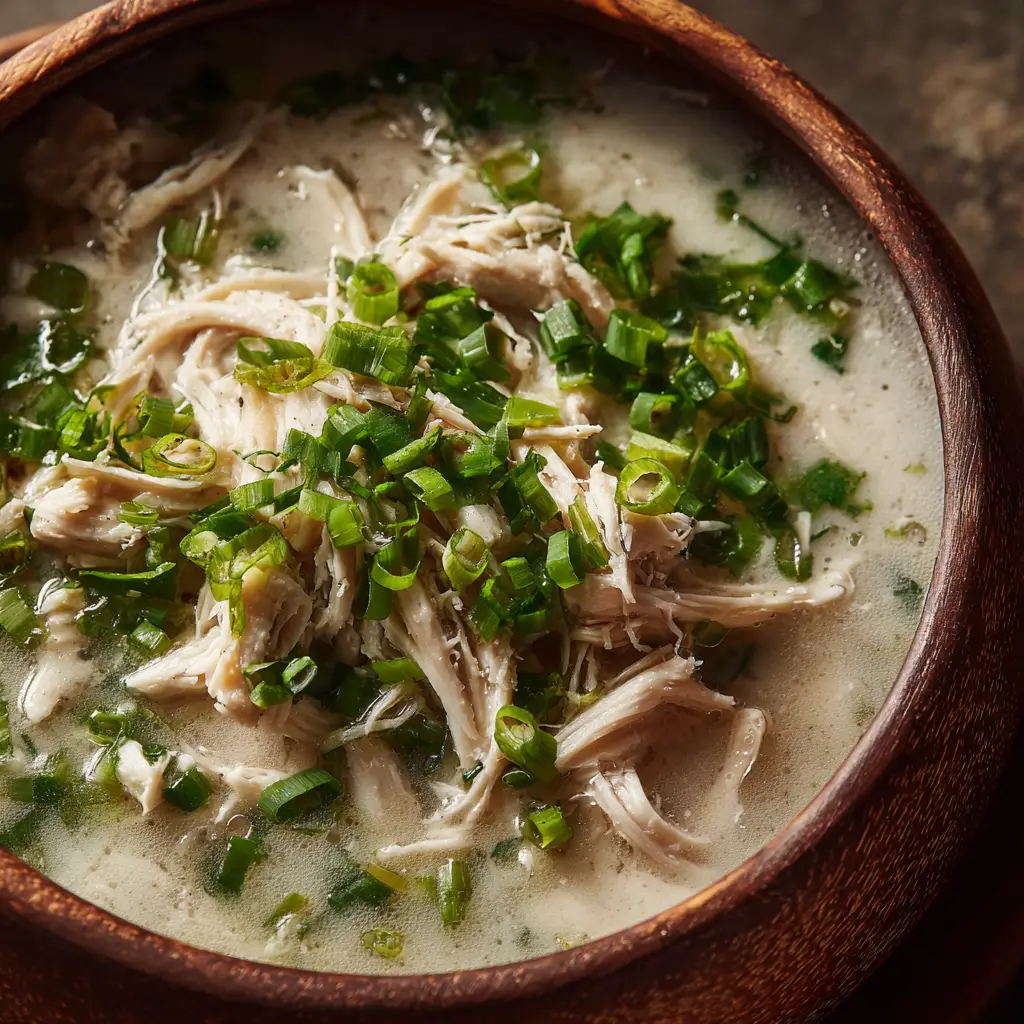
Once the chicken is cooked, it will be incredibly tender and falling off the bone. Carefully remove it from the pot and set it aside to cool slightly. Once cool enough to handle, shred the meat, discarding the skin and bones. You can return the bones to the pot to simmer for another 30 minutes for extra flavor if desired.
5. Finalize and Serve
Strain the broth through a fine-mesh sieve to remove the aromatics, ensuring a smooth, clean soup. To serve, place a portion of cooked rice in a bowl, top with a generous amount of shredded chicken, and ladle the hot broth over everything. Garnish with fresh scallions and season to taste with salt and pepper at the table. For a truly hearty meal, consider serving it alongside some Spicy Korean Pork.
Tips for the Perfect Milky Broth
The hallmark of a great Dak Gomtang is its milky, opaque broth. This comes from the collagen and fats emulsifying into the liquid during a long, gentle simmer.
- Do Not Boil Rapidly: After the initial boil, maintain a low, gentle simmer. A rolling boil will make the broth cloudy with impurities rather than milky with flavor.
- Use a Whole Chicken: The bones, cartilage, and skin are packed with collagen, which is the key to a rich broth.
- Patience is Key: A minimum of 1.5 hours is needed, but simmering for 2 hours or even slightly longer will yield a richer, more flavorful result.
Serving Suggestions
Dak Gomtang is a comforting meal on its own, but it pairs wonderfully with a few simple side dishes. Serve it with a bowl of kimchi for a spicy, fermented crunch that cuts through the richness of the broth. A simple side of steamed vegetables, like crispy air-fried broccoli, or a light salad such as a Tomato Garlic Salad (coming soon) would also complement the meal perfectly.
Storage and Reheating Instructions
This soup stores beautifully and the flavor often deepens overnight. Store the shredded chicken and broth in separate airtight containers in the refrigerator for up to 4 days. You can also freeze the broth for up to 3 months. To reheat, simply bring the broth to a gentle simmer on the stovetop and add the chicken to warm through before serving.
Frequently Asked Questions about Dak Gomtang
Yes, absolutely. Cooked somyeon (thin wheat noodles) or glass noodles are a delicious addition. Add them to the bowl just before serving to prevent them from getting soggy in the main pot of soup.
The milky appearance comes from simmering the chicken bones and skin over a long period on low heat. This process breaks down the collagen and fats, which emulsify into the water, creating the signature opaque, rich broth.
Yes, it is considered very nourishing and healthy. It’s rich in protein and collagen, low in carbohydrates (when served without rice), and is often eaten in Korea for its restorative and energizing properties.
A whole chicken is essential for making the best Dak Gomtang. The combination of meat, bones, skin, and cartilage is necessary to create the deep flavor and rich, collagen-filled broth.
Dak Gomtang is a simple chicken soup focused on creating a rich, milky broth from a whole chicken and basic aromatics. Samgyetang is a more complex, herbal soup where a whole young chicken is stuffed with glutinous rice, ginseng, and jujubes, and then simmered.
The Best Dak Gomtang Recipe
Dak Gomtang (Korean Chicken Soup)
Ingredients
Equipment
Instructions
- Thoroughly rinse the chicken under cold water. Remove any giblets and trim excess fat.
- Place the chicken in a large stockpot and cover with water. Bring to a rolling boil and cook for 5 minutes to release impurities. Discard the water, rinse the chicken, and clean the pot.
- Return the chicken to the pot with the peeled onion, smashed garlic, and sliced ginger. Add 12-14 cups of fresh, cold water. Bring to a boil, then reduce the heat to low, cover, and maintain a gentle simmer for 1.5 to 2 hours.
- Carefully remove the cooked chicken and let it cool slightly. Shred the meat from the bones, discarding the skin and bones.
- Strain the broth through a fine-mesh sieve into a clean pot or bowl. To serve, add cooked rice and shredded chicken to a bowl. Ladle the hot broth over the top. Garnish with fresh scallions and let individuals season with salt and pepper to their liking.
Notes
The broth can be cooled and the solidified fat can be skimmed off the top for a cleaner, less fatty soup if desired.
Share Your Creation!
We are certain this Dak Gomtang will become a staple in your home. It’s the kind of restorative, deeply satisfying meal that brings comfort to any table. If you’ve tried this recipe and loved it, we would be thrilled if you shared your experience in the comments below or saved it to your favorite board on Pinterest. Your support helps us share our culinary passions with the world!