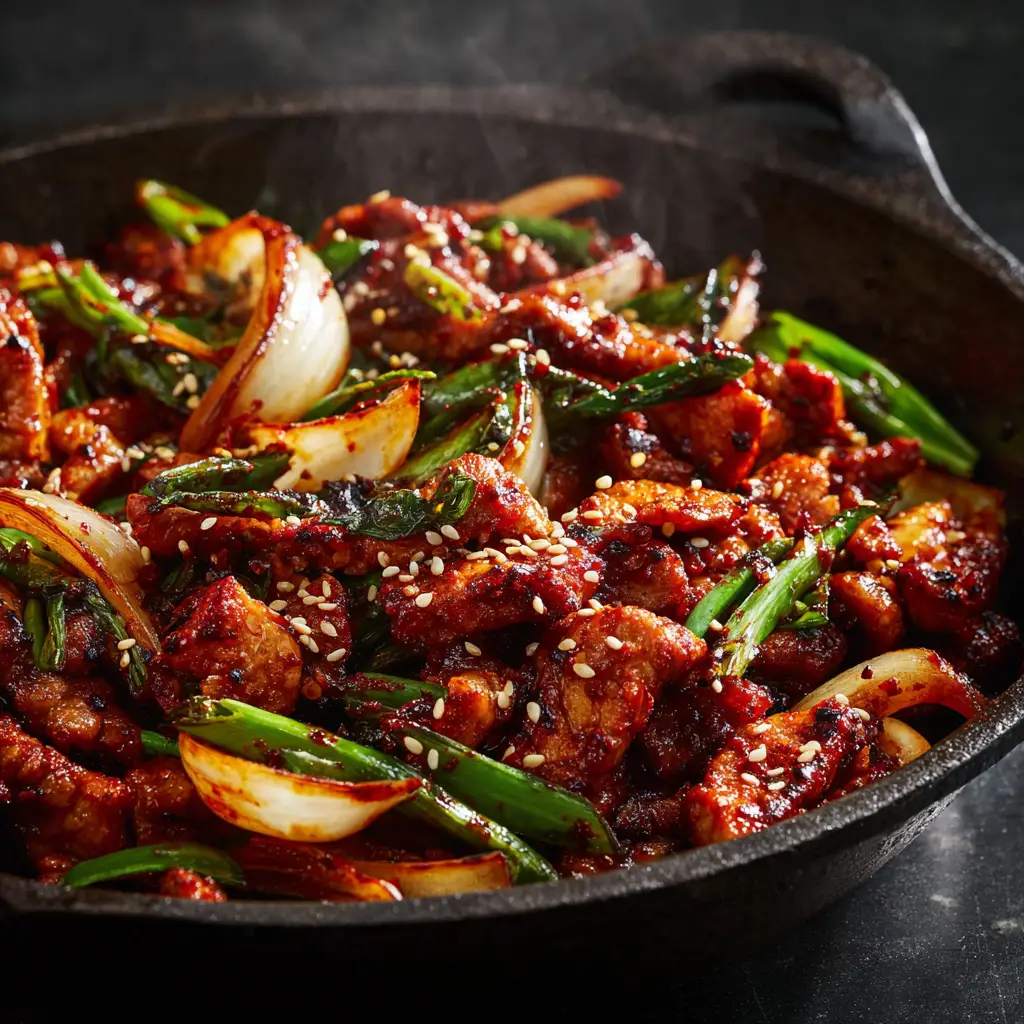
This authentic Korean Spicy Pork Stir Fry, known as Jeyuk Bokkeum, delivers a knockout punch of flavor. A vibrant, fiery marinade coats tender slices of pork, which are then stir-fried to perfection with crisp vegetables. If you’re searching for a quick, satisfying, and intensely flavorful meal that brings the heart of Korean barbecue right into your kitchen, this is the recipe you need.
We’ve crafted this recipe to be both authentic and approachable for the enthusiastic home cook. Forget takeout; in under 30 minutes, you can create a dish that’s miles ahead in taste and quality.
What is Jeyuk Bokkeum?
Jeyuk Bokkeum (제육볶음) is a staple of Korean cuisine, beloved for its bold, spicy-sweet flavor profile. The star of the dish is the marinade, a rich paste made from gochujang (Korean chili paste) and gochugaru (Korean chili flakes). This isn’t just about heat; the marinade creates a deeply savory and slightly sweet glaze that caramelizes beautifully in the pan. Traditionally cooked over an open flame for a smoky char, our recipe shows you how to achieve that signature taste right on your stovetop.
Why You’ll Love This Korean Spicy Pork Stir Fry Recipe
- Quick & Easy: This entire meal comes together in less than 30 minutes, making it perfect for a busy weeknight. It’s even faster than ordering delivery!
- Packed with Flavor: The combination of spicy, sweet, and savory notes from the gochujang marinade is incredibly addictive.
- Authentic Taste: We use core Korean ingredients to give you a restaurant-quality dish you’ll be proud to serve. Looking for another Asian-inspired weeknight dinner? Try our Easy Teriyaki Chicken Bowl.
- Customizable: Easily adjust the spice level or add your favorite vegetables to make this dish your own.
Key Ingredients for Success
The magic of this Korean Spicy Pork Stir Fry lies in its powerful marinade. While the ingredient list might seem long, these are staples in Korean cooking that provide unparalleled flavor.
For the Pork:
- Pork Shoulder or Belly: Thinly sliced pork is essential. Pork shoulder offers a great balance of meat and fat, while pork belly provides extra richness. You can often find pre-sliced pork at Asian markets, which is a fantastic time-saver.
For the Marinade:
- Gochujang (Korean Chili Paste): This is the heart of the marinade. It’s a fermented paste that provides a savory, sweet, and spicy flavor. Do not substitute this.
- Gochugaru (Korean Chili Flakes): Adds a layer of clean, smoky heat that is distinct from the gochujang.
- Soy Sauce: Provides the salty, umami backbone.
- Mirin or Rice Wine: Adds a touch of sweetness and helps to tenderize the meat.
- Toasted Sesame Oil: Lends a nutty, aromatic finish.
- Garlic & Ginger: Freshly minced is best for a pungent, aromatic kick.
- Brown Sugar: Balances the spice and salt, and helps the pork caramelize beautifully.
Vegetables:
- Onion & Scallions: These aromatics build the flavor base of the stir fry.
- Optional additions: Feel free to add sliced carrots, cabbage, or bell peppers for more texture and nutrition.
How to Make Korean Spicy Pork Stir Fry: A Step-by-Step Guide
This recipe moves fast, so have all your ingredients prepped and ready to go before you turn on the heat. This is a key principle of stir-frying, often called “mise en place.”
Step 1: Marinate the Pork
In a large bowl, combine the gochujang, gochugaru, soy sauce, mirin, sesame oil, minced garlic, grated ginger, and brown sugar. Whisk until the sugar is dissolved and the sauce is smooth. Add the thinly sliced pork and use your hands to massage the marinade into every piece, ensuring it’s completely coated. Let it marinate for at least 15 minutes, but for best results, allow it to sit for an hour or even overnight in the refrigerator.
Step 2: Prepare the Vegetables
While the pork is marinating, slice your onion and scallions. If you’re using other vegetables, get them chopped and ready now. For a simple side, consider making our crispy air fryer broccoli.
Step 3: Cook the Pork
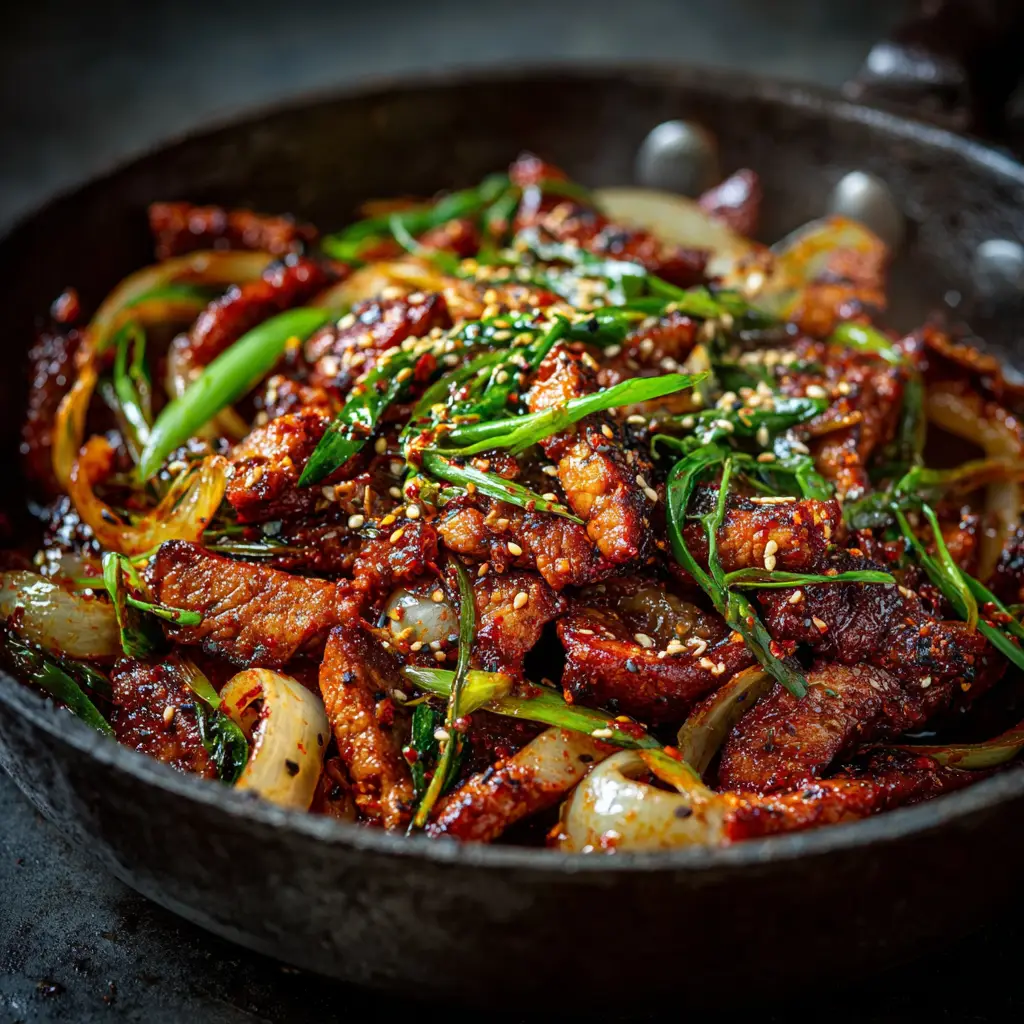
Heat a large skillet or wok over high heat. Add a neutral oil with a high smoke point, like canola or avocado oil. Once the oil is shimmering, add the marinated pork in a single layer. Do not overcrowd the pan; cook in batches if necessary. Let the pork sear for 2-3 minutes without moving to develop a nice char, then stir-fry until it’s about 80% cooked through.
Step 4: Add Vegetables and Finish
Add the sliced onions to the skillet and continue to stir-fry for another 2-3 minutes, until the onions begin to soften and the pork is fully cooked. Stir in the scallions during the last 30 seconds of cooking. The sauce should be thick and clinging to the pork. For those who love comforting pasta dishes, you might also enjoy this Chicken Garlic Parmesan Pasta.
Tips for Restaurant-Quality Jeyuk Bokkeum
- Don’t Skip the Marinade Time: Even 15 minutes makes a huge difference in flavor. The longer the pork marinates, the more tender and flavorful it will be.
- Use High Heat: High heat is crucial for getting a good sear and that slightly smoky flavor (char). This prevents the pork from steaming and becoming tough.
- Slice Pork Thinly: If you’re slicing the pork yourself, partially freezing it for about 20-30 minutes will make it much easier to get super-thin, uniform slices.
- Don’t Overcrowd the Pan: Give the pork enough space to make direct contact with the hot surface. This ensures it sears rather than stews, creating that delicious caramelization.
Serving Suggestions
This Korean Spicy Pork Stir Fry is incredibly versatile. The most classic way to serve it is with a bowl of hot, fluffy white rice, which helps to balance the spiciness. You can also serve it with a variety of Korean side dishes (banchan) like kimchi, pickled radishes, and seasoned spinach. For a low-carb option, serve the spicy pork in lettuce cups for a fresh, crunchy wrap.
Absolutely! You can marinate the pork for up to 24 hours in the refrigerator. The longer it marinates, the more flavorful it will be. The cooked dish is best served fresh but can be stored in an airtight container in the fridge for up to 3 days.
You can easily adjust the heat level by reducing the amount of gochugaru (chili flakes). The gochujang provides essential flavor beyond just spice, so it’s best to adjust the gochugaru first. You could start with one tablespoon and add more if desired.
Thinly sliced pork shoulder or pork belly are the best cuts. Pork shoulder is a great balance of lean meat and fat, while pork belly is richer and more tender. You can often find pre-sliced pork at Asian grocery stores specifically for this type of dish.
Gochujang is a thick, fermented Korean chili paste that provides a complex spicy, sweet, and savory flavor. Gochugaru is Korean chili flakes or powder, which adds a cleaner, more direct heat and smoky flavor. Both are essential for an authentic taste.
The classic pairing is a bowl of hot steamed white rice. It’s also delicious served with various Korean side dishes (banchan) like kimchi, or wrapped in lettuce leaves (ssam) for a fresh, crunchy alternative.
Absolutely! You can marinate the pork for up to 24 hours in the refrigerator. The longer it marinates, the more flavorful it will be. The cooked dish is best served fresh but can be stored in an airtight container in the fridge for up to 3 days.
You can easily adjust the heat level by reducing the amount of gochugaru (chili flakes). The gochujang provides essential flavor beyond just spice, so it’s best to adjust the gochugaru first. You could start with one tablespoon and add more if desired.
Thinly sliced pork shoulder or pork belly are the best cuts. Pork shoulder is a great balance of lean meat and fat, while pork belly is richer and more tender. You can often find pre-sliced pork at Asian grocery stores specifically for this type of dish.
Gochujang is a thick, fermented Korean chili paste that provides a complex spicy, sweet, and savory flavor. Gochugaru is Korean chili flakes or powder, which adds a cleaner, more direct heat and smoky flavor. Both are essential for an authentic taste.
The classic pairing is a bowl of hot steamed white rice. It’s also delicious served with various Korean side dishes (banchan) like kimchi, or wrapped in lettuce leaves (ssam) for a fresh, crunchy alternative.
More Delicious Recipes to Try
We hope you love this fiery and flavorful Korean Spicy Pork Stir Fry! If you make it, please leave a comment and let us know what you think. Don’t forget to share your creations and follow us on Pinterest for more culinary inspiration. For a hearty and comforting meal, check out our popular French Onion Pot Roast.
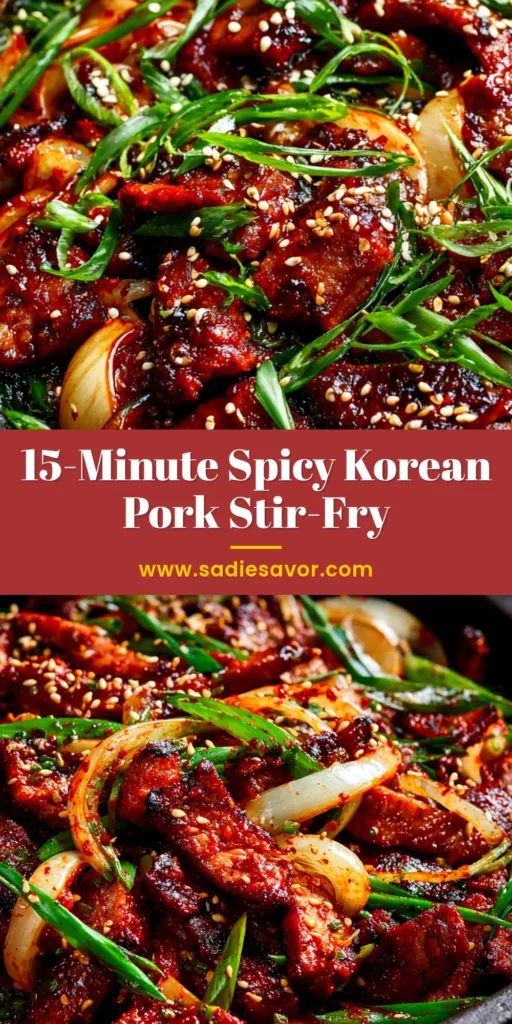
Korean Spicy Pork Stir Fry (Jeyuk Bokkeum)
This Korean Spicy Pork Stir Fry (Jeyuk Bokkeum) features tender, thinly sliced pork in a fiery, savory-sweet gochujang marinade, stir-fried to perfection in under 30 minutes. An authentic, quick, and intensely flavorful weeknight meal.
Ingredients
Equipment
Instructions
- In a large bowl, whisk together gochujang, gochugaru, soy sauce, mirin, sesame oil, minced garlic, grated ginger, and brown sugar until smooth. Add the sliced pork and use your hands to massage the marinade into the meat. Let it marinate for at least 15 minutes.
- Heat a large skillet or wok over high heat. Add the neutral oil. Once shimmering, add the marinated pork in a single layer, cooking in batches if necessary. Sear for 2-3 minutes without moving to char, then stir-fry until about 80% cooked.
- Add the sliced onions to the skillet and stir-fry for 2-3 minutes until the onions soften and the pork is cooked through.
- Stir in the scallions and cook for another 30 seconds. Serve immediately with hot rice.
Notes
For the best flavor, marinate the pork for at least one hour or overnight.
Ensure your pan is very hot before adding the pork to get a proper sear.
Adjust the amount of gochugaru to control the spice level to your preference.
Korean Spicy Pork Stir Fry (Jeyuk Bokkeum)
Ingredients
Equipment
Instructions
- In a large bowl, whisk together gochujang, gochugaru, soy sauce, mirin, sesame oil, minced garlic, grated ginger, and brown sugar until smooth. Add the sliced pork and use your hands to massage the marinade into the meat. Let it marinate for at least 15 minutes.
- Heat a large skillet or wok over high heat. Add the neutral oil. Once shimmering, add the marinated pork in a single layer, cooking in batches if necessary. Sear for 2-3 minutes without moving to char, then stir-fry until about 80% cooked.
- Add the sliced onions to the skillet and stir-fry for 2-3 minutes until the onions soften and the pork is cooked through.
- Stir in the scallions and cook for another 30 seconds. Serve immediately with hot rice.
Notes
Ensure your pan is very hot before adding the pork to get a proper sear.
Adjust the amount of gochugaru to control the spice level to your preference.